The Approval Dial
When you hand a task to Claude, you get to decide something important before it starts: how much latitude to give it.
There are two modes in Cowork. In the first, Claude pauses before each significant action and shows you what it's about to do. You read it, confirm it, and Claude proceeds. In the second, Claude runs the whole task from start to finish without stopping — you come back to something done. Same capabilities, same Claude. The difference is where your attention sits.
Neither mode is the "correct" one. They suit different situations, different tasks, and different stages of a working relationship. But if you're new to Cowork, there's a clear place to start — and understanding why will help you get the most out of both.
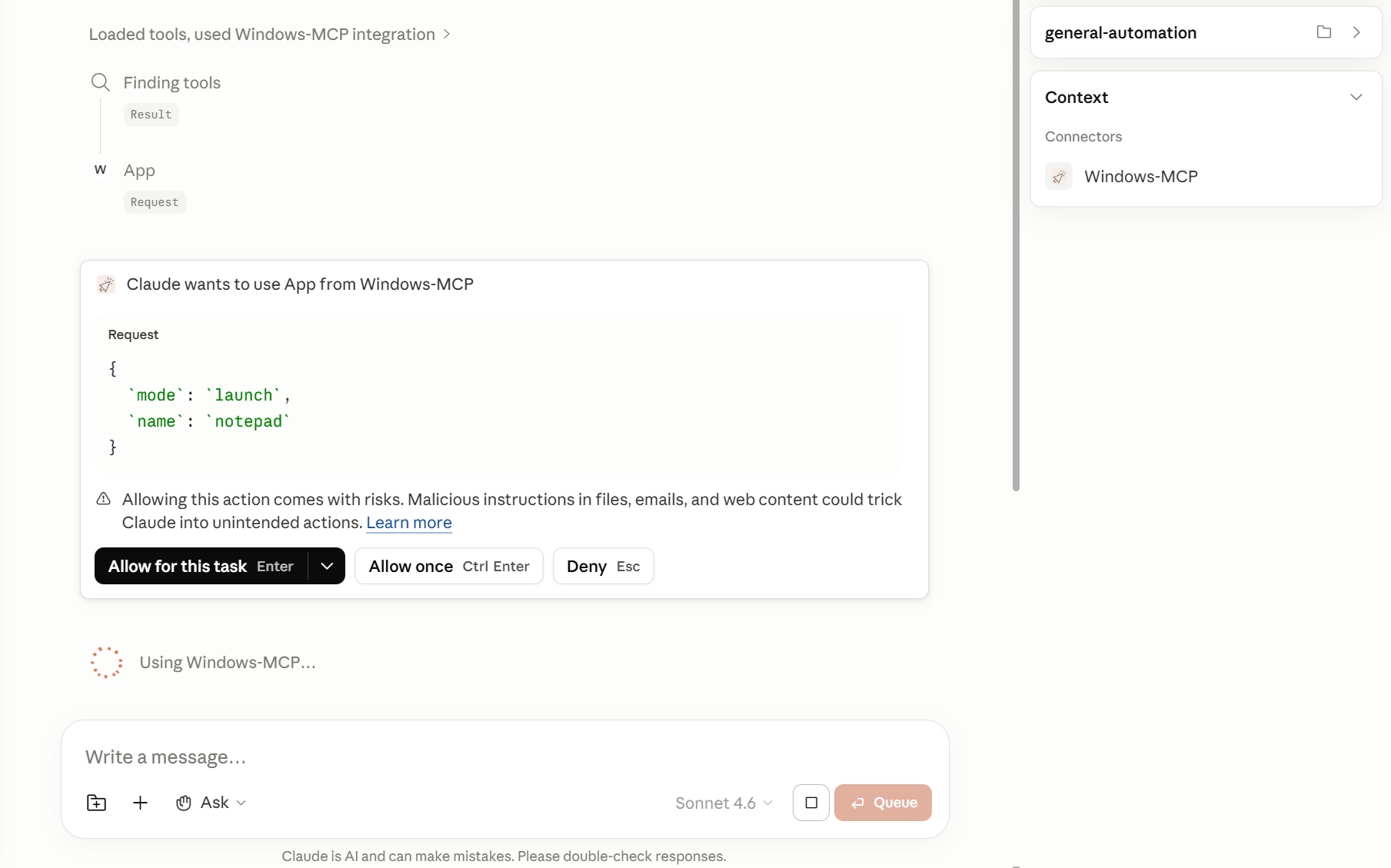
Ask Before Acting
In "ask before acting" mode, Claude narrates as it works.
Say you ask it to go through a folder of supplier contracts, pull out the renewal dates, and create a summary spreadsheet. In this mode, Claude will pause before opening the folder and tell you what it's about to do. It will pause before reading the files. It will pause before creating the spreadsheet and show you what it plans to put in it. At each step, you can say yes, or you can redirect.
This might sound like a lot of stopping. In practice, most of those checkpoints pass in a few seconds — you glance at the plan, it looks right, you confirm, Claude moves on. But occasionally you'll catch something: a folder name Claude interpreted differently than you intended, an output format that isn't quite what you had in mind, a step you didn't realize was part of the process. Catching that early is much easier than untangling it after the fact.
There's another reason to start here that has nothing to do with catching errors. Watching Claude work through a task step by step is one of the best ways to learn how to instruct it. You start to see what information it needed, what it guessed at, where it would have gone wrong if you hadn't been clear. That feedback loop makes you faster at writing the initial prompt. Most people who become fluent at delegating to Claude spent time in "ask before acting" first — not because they were being cautious, but because they were paying attention.
You can switch to this mode in your Cowork settings at any time.
Act Without Asking
"Act without asking" is exactly what it sounds like. You describe the task, Claude runs it, and you come back to the result.
Think of a marketing manager who runs the same competitive analysis every Friday morning: pull the latest pages from three competitor websites, compare them against the same criteria, produce a one-page summary with the key changes highlighted. She's done this task in "ask before acting" mode a dozen times. She knows what Claude does at each step, she trusts the output format, and the task is predictable enough that pausing to confirm each action would just slow things down. For her, "act without asking" isn't a leap of faith — it's the earned result of a few weeks of watching how the task runs.
That's the right way to think about this mode: not as a setting for confident people, but as a setting for familiar tasks. The question isn't "do I trust Claude in general" — it's "do I trust Claude with this specific task, given what I've seen it do before."
For tasks you're running for the first time, or tasks that touch important files, the slower mode is almost always worth it. The time you save by skipping the checkpoints rarely outweighs the cost of discovering, ten minutes in, that Claude took a different turn than you expected.
The One Exception
There is one action Claude will always pause on, regardless of which mode you're in: permanently deleting a file.
It does not matter if you've asked it to clean up a folder, archive old documents, or remove duplicates. Before anything gets permanently deleted, Claude will stop, show you exactly what it's about to remove, and wait for your explicit confirmation. This is not a setting you can turn off. It is built into how Cowork works.
The reasoning is simple. Most mistakes are recoverable. You can undo a renamed file, rewrite an overwritten document, or redo a summary that missed the mark. A permanently deleted file is a different category of problem. So whatever pace you've set for the rest of the task, that one action always gets its own pause.
The Trust Arc
There's a version of this chapter that frames "ask before acting" as a safety net — a way to keep an eye on a tool you're not quite sure about. That framing isn't wrong, but it misses something.
The more useful way to think about it is as an on-ramp. When you start working with any new colleague, you tend to check in more at the beginning. Not because you distrust them, but because you're still building a shared understanding of how you work, what you expect, and what good looks like in your context. As that understanding develops, the check-ins get shorter and less frequent. You're not relaxing your standards — you're becoming more efficient because you need less overhead to stay aligned.
That arc — check in more at first, then calibrate as confidence builds — is the natural rhythm of delegation, whether the delegate is human or AI. "Ask before acting" is not for beginners only; it's for new tasks, new file structures, and unfamiliar territory. "Act without asking" is not for experts only; it's for tasks you know well and have run enough times to trust the pattern.
The goal is not to graduate permanently to one mode. The goal is to match the mode to the task.
Open Cowork settings and make sure you're in "ask before acting" mode. Then give Claude a real task — something that involves at least two or three steps, like reading through a set of files and producing an output from them.
As Claude works through it, don't just approve each step automatically. Read what it says it's about to do. Ask yourself: is that what I expected? Is that how I would have done it? Would I have thought to include that step?
When the task is done, notice which steps surprised you — not because they were wrong, but because they were different from what you assumed. That gap between your mental model of the task and how Claude approached it is where most of the learning happens. Repeat the same task a few times over the next week, and watch how quickly the surprises become familiar.